


Cookware 3 min read
Frying pan or Dutch oven for dinner?

In this guide

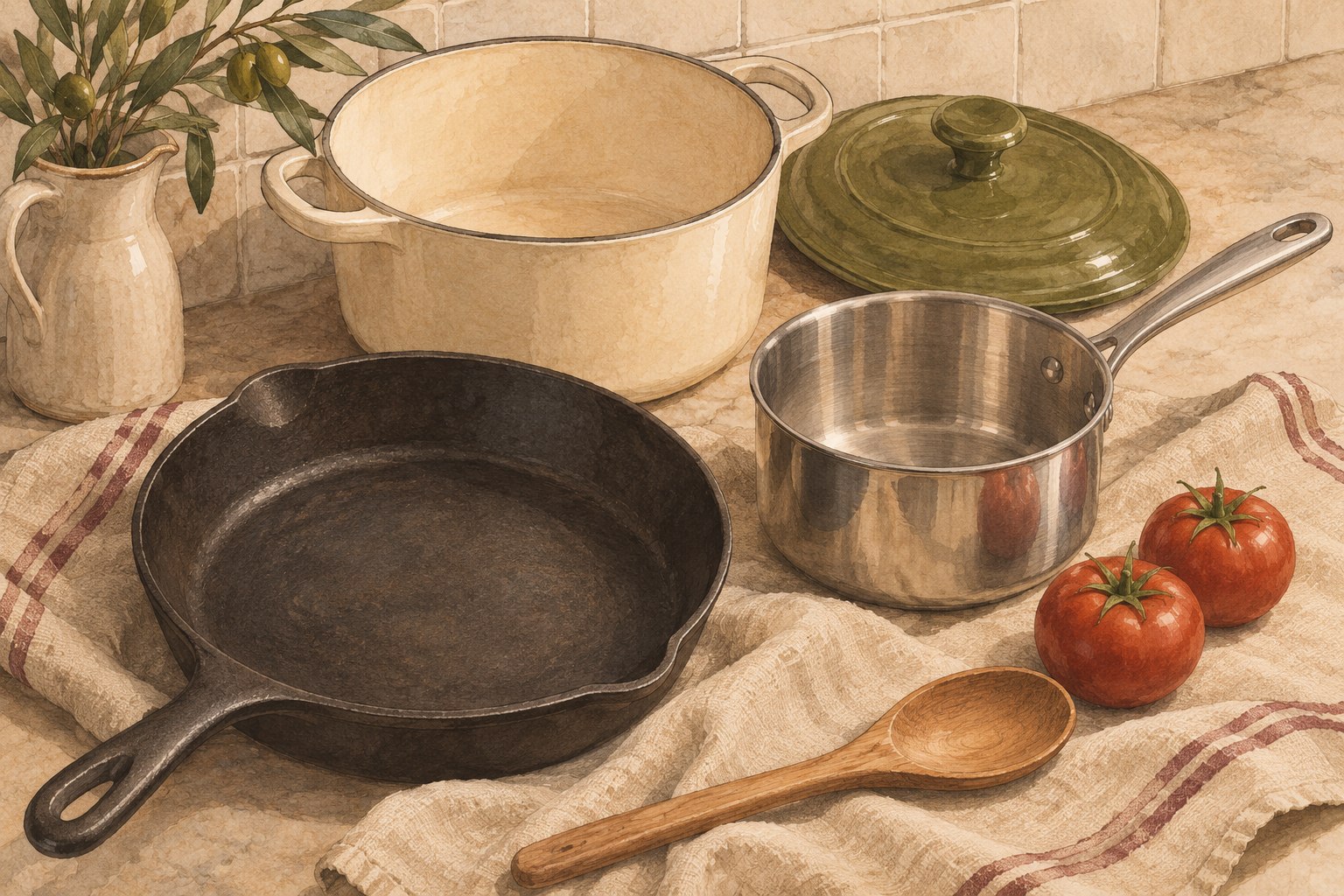
A frying pan and a Dutch oven solve different space problems. Compare their shapes against the steps in your recipe instead of treating the deeper or heavier vessel as an automatic upgrade.
Look at where the food needs to go
A broad shallow base gives ingredients room to sit across a surface and keeps them accessible for turning. A deep covered vessel contains a different volume and needs room for stirring and lifting a lid. Read the recipe for clues about which shape it expects. The number of servings alone cannot settle the choice, because bulky ingredients and a liquid-rich meal occupy space differently. Draw the busiest cooking stage in simple terms: food spread across a base, ingredients being stirred together, or a covered mixture sitting below the rim.
Match utensils to the shape
Try the stirring, turning and serving motions with an empty vessel before committing to a purchase. A long-handled tool may reach a deep pot comfortably but be awkward in a crowded sink afterward. A broad serving utensil needs enough room at the rim of a shallow pan. Leave somewhere for the lid and utensil to rest between tasks. These practical checks reveal a poor match more quickly than a list of material claims. Choose tools that suit the cookware's finish and follow the manufacturer's care directions for contact surfaces.
Include the meal's whole route
Check where the vessel begins, where it finishes and whether it needs to move while filled. The Tramontina twelve-inch pan and Lodge six-quart Dutch oven offer useful contrasting footprints. Compare the sink, cupboard and oven arrangement as well as the hob. Decide whether serving directly from the cookware is comfortable in your household or whether a separate dish simplifies the route. Think about the extra items needed for a second batch, portioning leftovers or keeping ingredients separate during a recipe rather than assuming a single vessel removes every other task.
Give each purchase a distinct reason
If you already own one useful shape, name the meal that the other would make easier. Perhaps you need a covered vessel for a recipe that specifies one, or you want a broader base than your existing pot provides. Keep that purpose specific enough to evaluate after several dinners. Store the cookware where its weight and handles are manageable, and avoid buying a near-duplicate because it comes in a coordinated finish. Build a small collection around repeatable cooking jobs. The most useful choice is the vessel that fits a clear sequence of preparation, cooking, serving and cleaning in your kitchen.
Tools to consider
A broad shallow option for comparing access and base area.
Consider before buying: Its shape does not provide the covered capacity of a Dutch oven.
A contrasting deep, lidded vessel.
Consider before buying: Consider filled weight and lid storage as part of the choice.
A few practical questions
Can I swap the two in any recipe?
Not automatically. Use an appropriate recipe adaptation that accounts for shape, capacity, covering and doneness checks.
Put it to work
Lemony white bean skillet · Lemon-herb chicken & potatoes · Roasted carrot & ginger soup
Product information & sources
Recommendations are based on published product specifications and practical fit for the task. Check the exact model, seller, dimensions and care instructions before ordering.
Pinterest image
Keep this guide close for your next kitchen project.
