

Cookware 3 min read
Choose a skillet size for the meals you cook

In this guide

A skillet size makes sense only when it matches the amount of food you actually cook. Start with a familiar dinner, the burner you use most, and the space available beside the stove.
Measure the food surface, then the stove
A pan's advertised diameter does not necessarily describe its flat cooking area. Sloping sides, rounded corners and the handle all affect how much room it needs. Measure the clear area around your burner, including the neighboring pan you often use. Then check the manufacturer's drawing rather than relying on a product photograph. A twelve-inch skillet may fit on the hob while its handle blocks a drawer or another control. Include somewhere stable to put the lid if your chosen setup uses one.
Use a real meal as your capacity test
Picture the ingredients before they shrink. A pile of raw mushrooms occupies more space than the finished topping, and a recipe for four can still require cooking in batches. Choose a pan that gives the food useful contact with the base instead of expecting extra depth to solve crowding. If you usually cook two portions, a moderate skillet may be easier to store and wash. Keep a second batch in the plan when a larger pan would overwhelm your burner.
Compare size with weight and handling
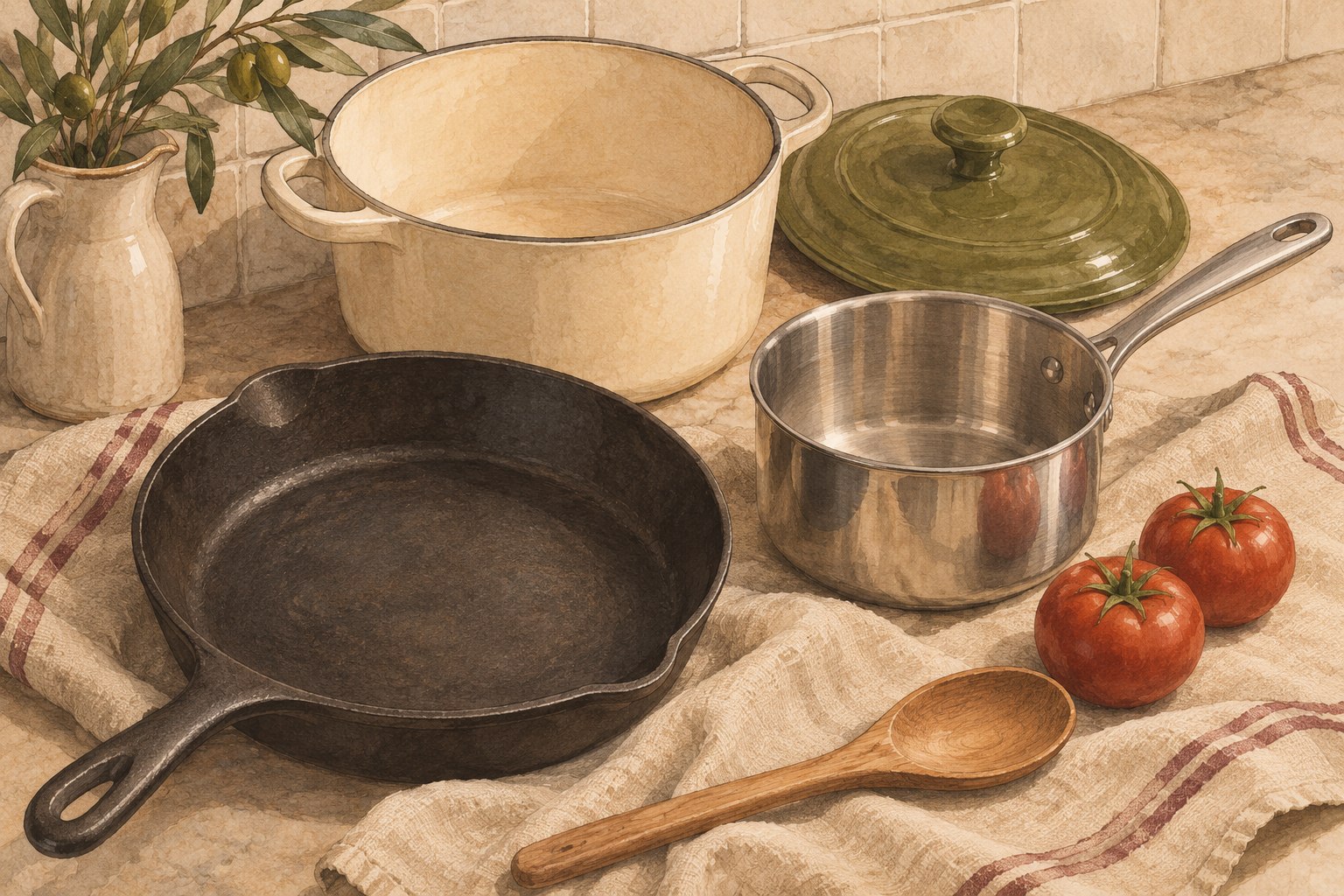
The Lodge ten-and-a-quarter-inch skillet and Tramontina twelve-inch stainless frying pan illustrate two different combinations of material and footprint. Size alone does not tell you which will be easier to move. Check the empty weight, handle shape and whether you can support the far side when carrying food. Imagine the pan filled, rather than testing only an empty display model. Leave a clear route from hob to heat-resistant resting place, and make sure the handle can stay away from the counter edge.
Make the purchase fit your existing routine
Before buying, trace a candidate pan's outline on paper and place it in the cupboard and sink. Check whether the handle will prevent stacking or force you to remove several other pieces first. Think about the cleaning method you will accept after a weekday meal; a pan that needs a care routine you dislike is unlikely to become your everyday choice. Keep your current useful pan while you learn what the new size does well, and build recipes around its actual working area rather than its largest possible serving claim.
Tools to consider
A moderate-diameter cast iron reference for comparing footprint and care.
Consider before buying: Allow for hand washing, drying and oiling.
A wider stainless alternative for spreading ingredients across the base.
Consider before buying: Check burner coverage and handle clearance before choosing the larger size.
A few practical questions
Should I buy the biggest skillet that fits?
Only if your portions, burner and lifting routine justify it. A smaller pan plus planned batches can be more practical.
Put it to work
Creamy tomato & spinach orzo · Lemony white bean skillet · Garlicky mushrooms on toast
Product information & sources
Recommendations are based on published product specifications and practical fit for the task. Check the exact model, seller, dimensions and care instructions before ordering.
Pinterest image
Keep this guide close for your next kitchen project.
