


Cookware 3 min read
Cast iron or enamel: choose the care routine first

In this guide

Seasoned cast iron and enameled cast iron share a material name, but they ask for different care. Choose between them by looking at the shape you need and the routine you will maintain.
Start with the cooking job
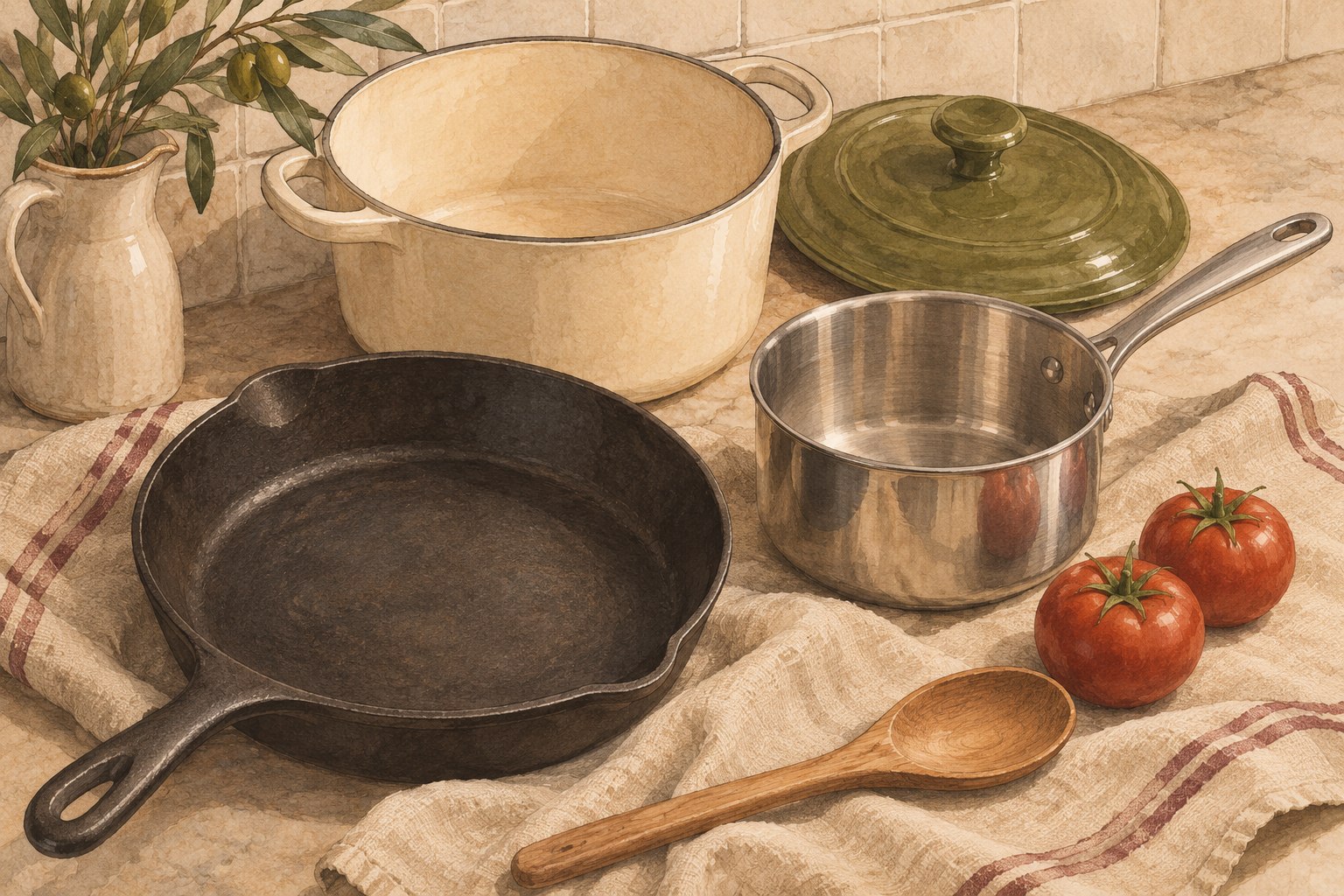
A shallow skillet gives you access for turning, stirring and moving food across a broad surface. A lidded Dutch oven offers deeper sides and room for dishes that need a covered pot. These shapes matter before the finish does. If your usual meal involves a mushroom topping or a shallow pan of vegetables, a large covered pot may be awkward. If you want a generous covered dish, a small skillet cannot gain capacity merely because both products are made from cast iron.
Compare the surfaces without confusing them
The Lodge seasoned skillet uses an oil-seasoned surface, while its enamel Dutch oven has a porcelain enamel finish. The skillet's manufacturer specifies washing, drying and oiling. The enamel pot's directions recommend hand washing and avoiding metal utensils. Read each product's own instructions before applying advice from another piece in the cupboard. A cleaning shortcut suited to one finish can be a poor choice for the other. Keep the manufacturer's care page with the model information so it remains easy to find.
Plan for lifting and landing
Weight becomes more noticeable when a pot contains a whole meal. Look at handle openings and decide whether your oven mitts can grip them securely. Measure the route between hob, oven and counter; a clear landing area is more useful than a decorative stand several steps away. If another person will use the cookware, include their handling preferences too. Choose a size you can move deliberately, and divide a large cooking job between vessels when that is the more comfortable arrangement.
Build a simple end-of-meal routine
Give the cookware time and space for the care its manufacturer requires instead of leaving it beneath a crowded sink. Store it dry and protect a finish from contact with another heavy item. Keep lids where they can be lifted without pulling an entire stack forward. The goal is a routine you can repeat after an ordinary dinner, not a special project reserved for weekends. Choose one piece for a clear role first, use it often enough to learn its quirks, and add another shape only when a real cooking gap appears.
Tools to consider
Shows the maintenance expectations of an oil-seasoned skillet.
Consider before buying: Use its own wash, dry and oil instructions.
A lidded enamel option for a different cooking shape.
Consider before buying: Its weight and enamel care deserve a separate handling plan.
A few practical questions
Does enamel mean no care is needed?
No. The finish changes the care instructions; it does not remove the need to protect, clean and store the pot appropriately.
Put it to work
Lemony white bean skillet · Lemon-herb chicken & potatoes · Garlicky mushrooms on toast
Product information & sources
Recommendations are based on published product specifications and practical fit for the task. Check the exact model, seller, dimensions and care instructions before ordering.
Pinterest image
Keep this guide close for your next kitchen project.
