


Cookware 3 min read
Check cast-iron weight and storage before buying

In this guide

Cast iron earns its space when you can retrieve it, cook with it and put it away comfortably. Before buying, consider the filled vessel and its route through your kitchen, rather than its empty appearance on a shelf.
Compare the load you will actually move
Read the listed empty weight for the exact model, then consider the food and liquid your usual recipe adds. A skillet and a deep covered pot create different lifting tasks, even when both suit the meal. Decide whether you normally move the vessel between hob, oven and table or serve food into another dish. Do not turn a product photograph into a handling test. If you can inspect the cookware before purchasing, compare its empty handling cautiously and remember that a full meal changes the load.
Check handle access with protection
Look at the handle shape and the room available for your normal oven protection. A long skillet handle and a Dutch oven's two loop handles ask for different grips. Consider whether you can reach the intended hold without leaning over another vessel or approaching from an awkward angle. Check how a lid affects access and where it will rest when removed. Choose equipment that suits the people who will use it regularly. Another person's comfortable grip or preferred cookware size does not establish what will work in your kitchen.
Prepare the landing position
Identify a suitable heat-resistant resting space before choosing a vessel that needs to be carried while filled. Compare the route from hob or oven with the available counter, including any turns and interruptions. Keep the landing area clear of packaging, fragile dishes and unrelated appliances. Consider the reach needed to place the pan down deliberately, not simply whether its base fits. If the route remains awkward, a different size, a changed serving arrangement or help with the filled vessel may be more practical than buying another handle accessory.
Make storage a purchase requirement
Measure the cupboard opening, usable shelf area and room needed to grip and remove the pan. Check the shelf manufacturer's load information or obtain appropriate advice when its suitability is unclear; do not infer capacity from appearance. Avoid a stack that requires moving several heavy pieces to reach the one used most often. Keep the lid and handle from blocking other everyday equipment. Choose the model you can manage consistently, even if that means a smaller batch or another cooking shape. Useful cookware should fit a realistic routine rather than create a lifting challenge whenever dinner begins.
Tools to consider
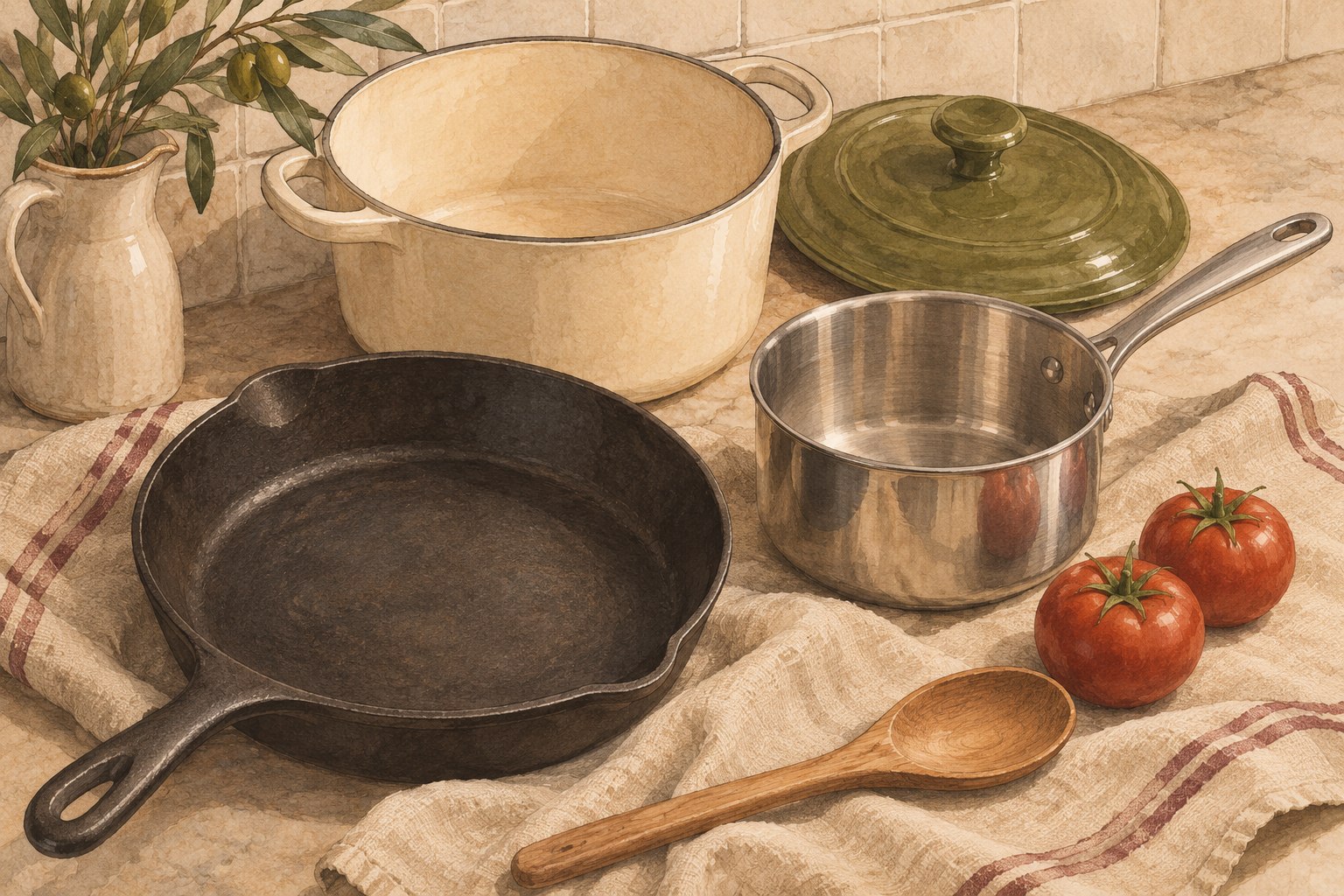
A seasoned skillet reference for comparing a long handle and moderate cooking footprint.
Consider before buying: Assess filled handling and accessible storage, rather than judging size alone.
A contrasting deep, lidded vessel with two loop handles.
Consider before buying: Allow for food, liquid and lid weight when considering the carrying task.
A few practical questions
Is the listed empty weight enough to judge handling?
No. Consider the recipe's contents, the complete route and the grip available with appropriate oven protection.
Put it to work
Lemony white bean skillet · Lemon-herb chicken & potatoes · Garlicky mushrooms on toast
Product information & sources
Recommendations are based on published product specifications and practical fit for the task. Check the exact model, seller, dimensions and care instructions before ordering.
Pinterest image
Keep this guide close for your next kitchen project.
