


Meal prep 3 min read
Plant-based meal prep with separate finishes

In this guide

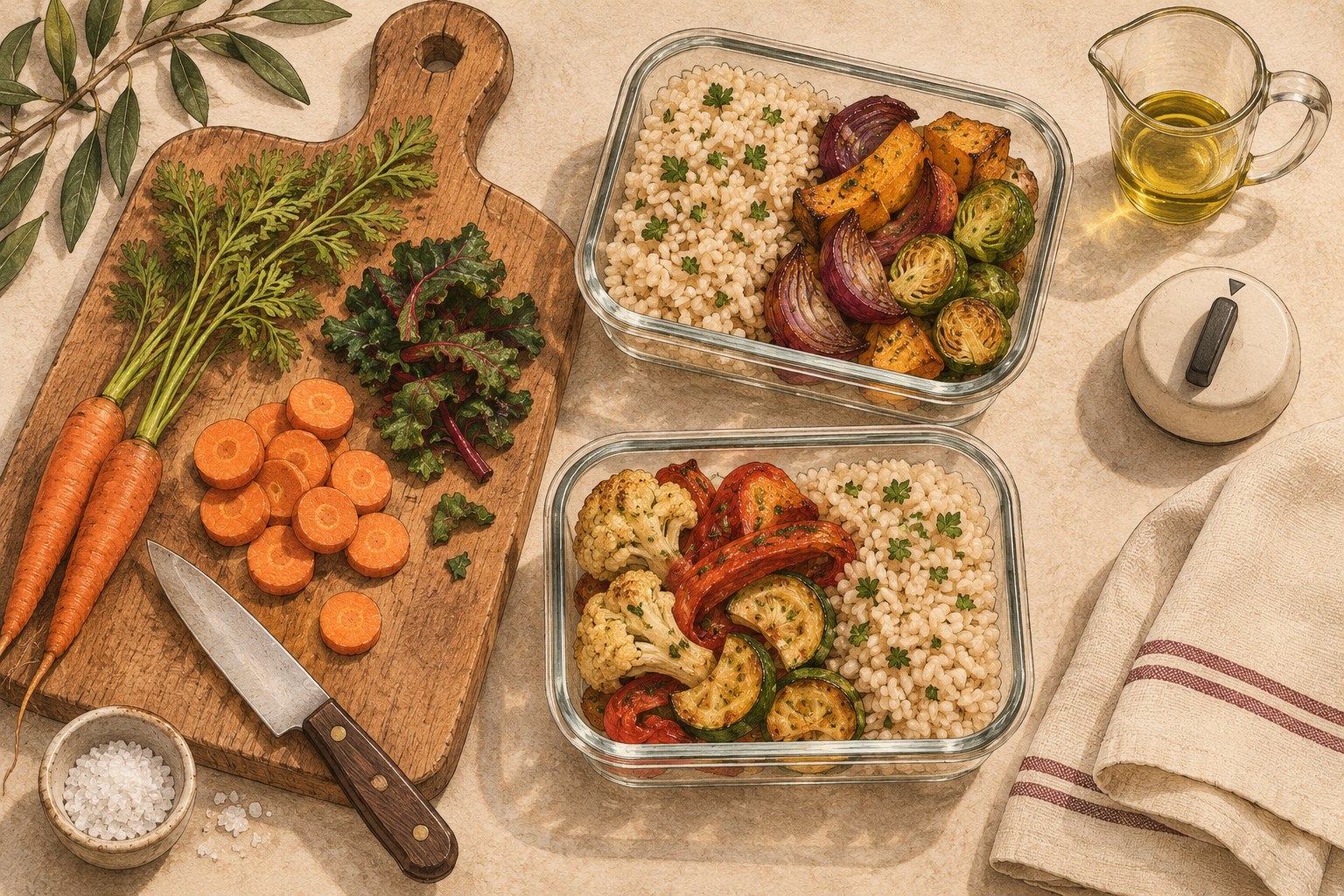
Plant-based meal prep can begin with a few adaptable components instead of several complete identical meals. Beans, vegetables, grains and a sauce can take different forms at serving time. The useful question is how each component will be eaten, not how many containers you can fill.
Plan meals around components you enjoy
Choose a small set of recipes that share prep without becoming interchangeable. A bean skillet and a grain bowl can use the same rinsed beans while keeping their seasonings and finishing methods different. Record the quantities allocated to each dish so shared prep does not leave the final recipe short.
Decide which textures should remain distinct. Roast vegetables can stay separate from a smooth sauce, and a crunchy topping can wait until serving. If someone prefers fewer mixed textures, assemble their portion from the same clearly identified components rather than mixing everything and then trying to separate it.
Prepare each component for its next use
Rinse or drain canned ingredients according to the intended recipe, reserving useful packing liquid when requested. Wash and dry greens before storing them using a suitable method. Keep the knife, board and transfer bowl available long enough to finish one stage before introducing the next ingredient.
For a small kitchen, sequence cooking around the equipment that is hardest to share. If two components need the oven, check whether their recipes genuinely allow the same conditions; otherwise plan separate stages. A convenient schedule should not override the recipe's method or the appliance's capacity.
Store plainly and finish with choice
Divide cooked perishable components into suitable containers and refrigerate promptly. Label the food and preparation date, retaining original labeling for packaged additions. Plant-based food still needs an appropriate food-safety plan; the absence of meat does not make a cooked mixture a counter-storage item.
Keep sauces and toppings clearly labeled, particularly when they contain ingredients someone needs to avoid. Use separate serving utensils where needed. When assembling a later meal, heat or serve components using their appropriate instructions, then add the finishing choices at the table instead of automatically mixing every prepared item together.
Tools to consider
The small openings can retain grains and other small ingredients during recipe-directed rinsing.
Consider before buying: Its drainage is deliberately slower than a general colander; check capacity before a large batch.
Matching portion boxes help keep prepared components visible and separate.
Consider before buying: Follow food-specific storage and container directions rather than relying on the seal alone.
A few practical questions
Does component prep mean every meal needs to be a bowl?
No. Components can become a skillet, toast topping, soup addition or packed lunch when the recipes support those uses. Keep enough identity in each recipe that the meals feel different.
Put it to work
Lemony white bean skillet · Garlicky mushrooms on toast · Roasted carrot & ginger soup
Product information & sources
Recommendations are based on published product specifications and practical fit for the task. Check the exact model, seller, dimensions and care instructions before ordering.
Pinterest image
Keep this guide close for your next kitchen project.
