


Storage 3 min read
Stack food containers without losing access

In this guide

Stacking is useful when it makes food or equipment easier to find. A tightly packed shelf is not an improvement if you must dismantle it each time you want one portion or a matching lid.
Separate empty storage from filled storage
Empty containers can often be organized differently from filled ones, so plan the cupboard and refrigerator as separate tasks. Identify which pieces belong together and keep the corresponding lids easy to select. Do not assume a nesting arrangement for empty boxes is also an appropriate stack when food is inside. Follow the manufacturer's intended use and consider the load, shape and stability of the actual arrangement. Leave enough clearance to grip the container you want without pushing neighboring items toward the shelf edge or lifting an entire unstable tower.
Choose a small number of useful footprints
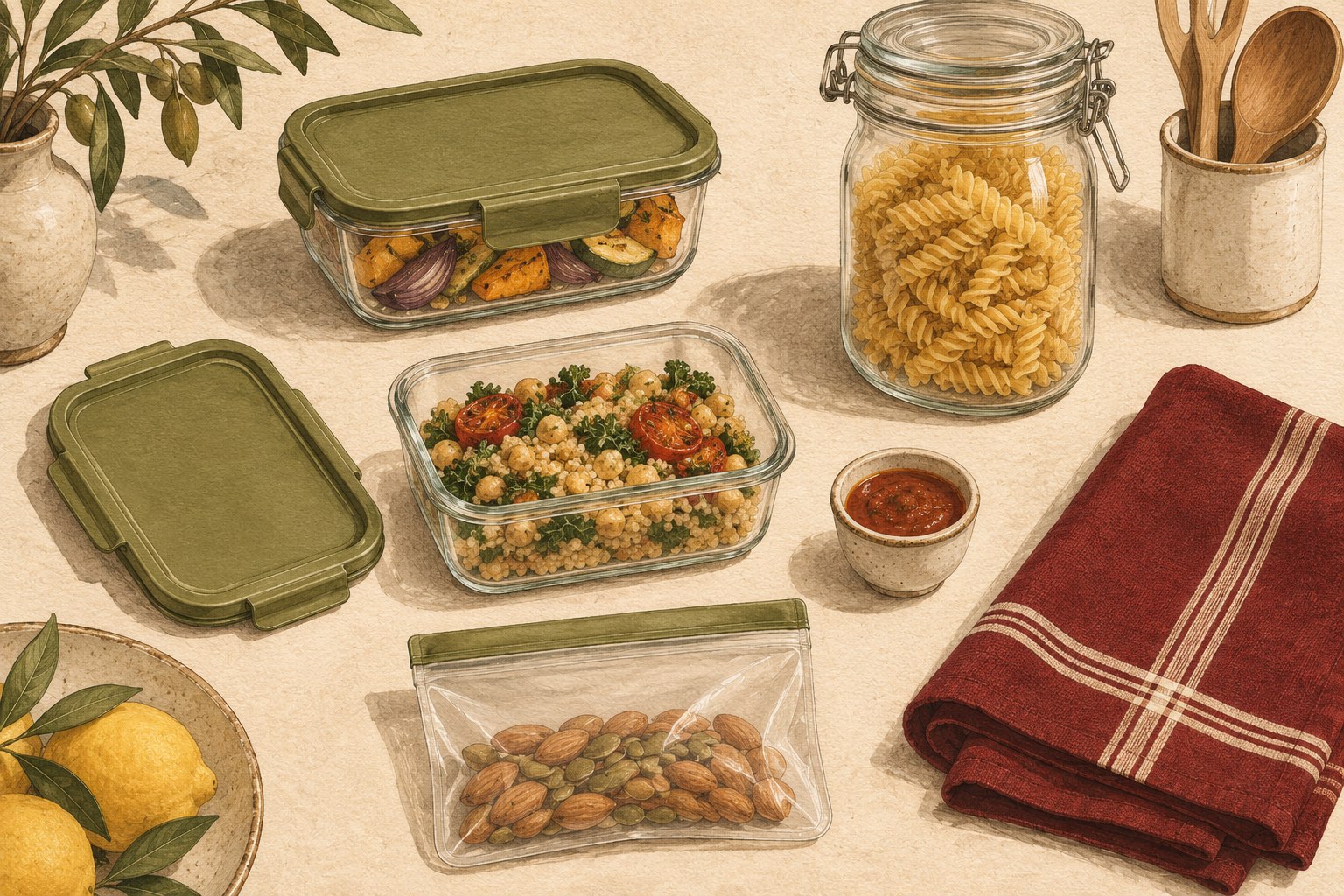
Look at your usual portions and the shelf dimensions before collecting many sizes. A repeated rectangular footprint can simplify placement, while a tall pantry canister solves a different problem from a shallow meal box. The Rubbermaid medium reference and OXO POP canister illustrate why matching the role matters more than choosing one shape everywhere. Measure the cabinet opening as well as the shelf interior. Keep the sizes you use most within easy reach and move infrequent specialty pieces to a position that does not interrupt a routine lunch or dinner.
Organize lids as working equipment
Sort lids by the container they fit instead of keeping a loose pile that looks tidy only when unused. Check markings or model information when similar pieces have different permissions. During cleanup, inspect and dry each part as its manufacturer directs before returning it to storage. If a lid is missing or damaged, resolve that pairing rather than letting an unusable box take the most accessible space. A replacement part should be confirmed for the exact container. Buying another full set may be unnecessary when the actual problem is one incomplete pair.
Keep the next meal visible
For filled containers, label what is inside and place the portion you intend to use next where it can be seen and reached. Do not let a geometrically neat stack hide food behind an unrelated large box. Leave room to follow appropriate handling and storage guidance rather than filling every gap. Review the arrangement after a few days of real use: which box repeatedly has to move, and which size is never chosen? Adjust the layout around those observations. A useful storage system stays understandable to everyone who uses it, even after one person removes a container and another returns a different one.
Tools to consider
A defined rectangular portion format for comparing repeated footprints.
Consider before buying: Check the intended stacking arrangement rather than assuming every lid supports any load.
A stackable pantry format with documented dimensions.
Consider before buying: Its tall profile may suit a different shelf from meal-storage boxes.
A few practical questions
Is the tidiest-looking stack always the best arrangement?
No. Favor stability, visibility and easy retrieval over filling every available gap.
Put it to work
Lemony white bean skillet · Lemon-herb chicken & potatoes · Roasted carrot & ginger soup
Product information & sources
Recommendations are based on published product specifications and practical fit for the task. Check the exact model, seller, dimensions and care instructions before ordering.
Pinterest image
Keep this guide close for your next kitchen project.
