


Storage 3 min read
Reusable bags or rigid food containers?

In this guide

Reusable bags and rigid boxes are different storage shapes rather than competing answers to every task. Choose the format by considering what the food needs, how you will fill it and how it will be cleaned.
Look at protection and access
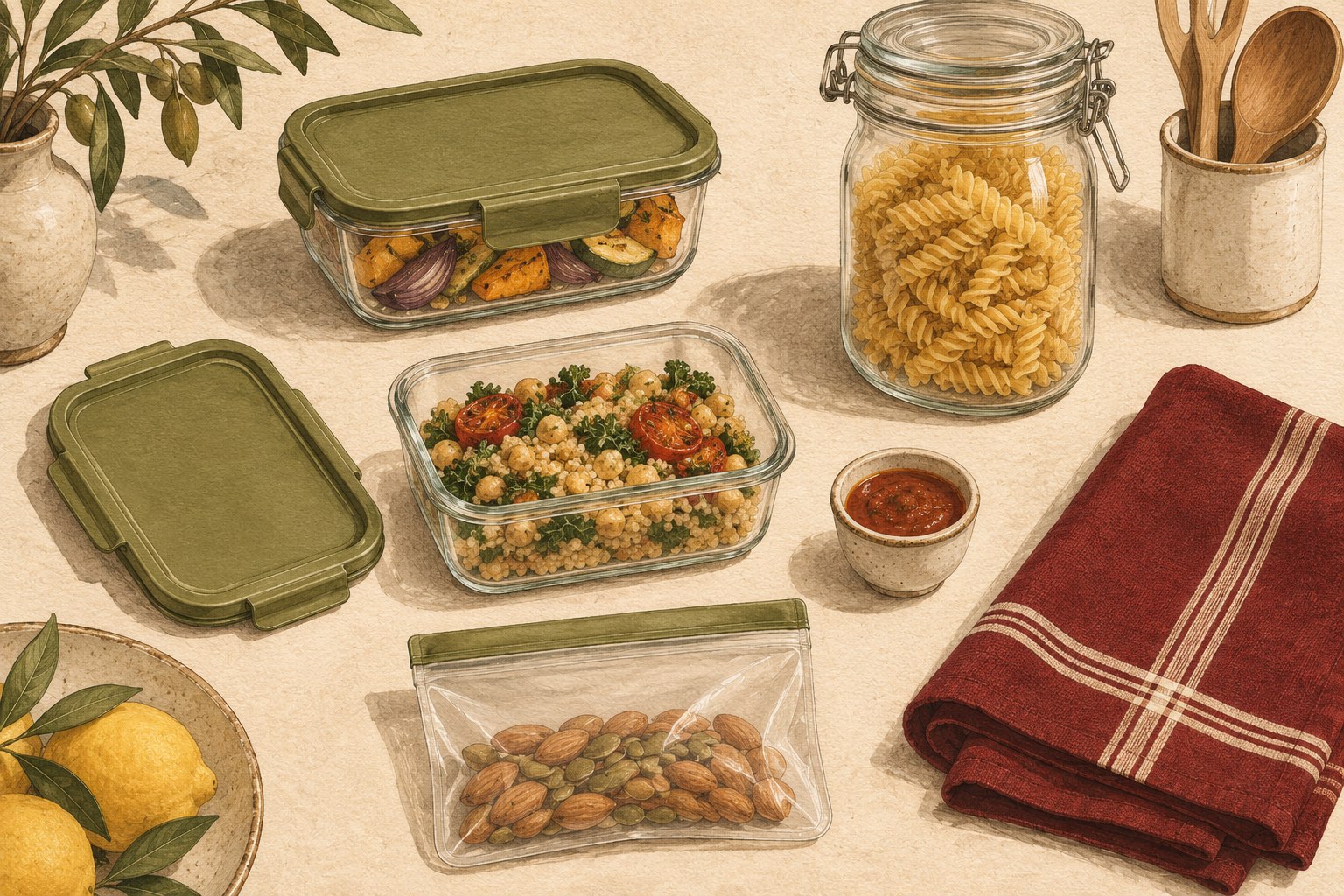
Decide whether the contents need support against crushing, a broad opening for serving or room to be spread in a flexible shape. A rigid container can create a predictable footprint on a shelf, while a bag conforms differently around its contents. Neither property supplies a universal storage rule. Picture the food in the vessel and the movement needed to remove it later. Consider whether a spoon can reach the corners, whether a sandwich will keep the shape you want, and whether the portion will be eaten directly from the container or transferred elsewhere.
Practice the filling and closing action
Place a flexible bag in a stable position before adding food, keeping the sealing area accessible. With a rigid container, identify the correct lid and check the closing sequence before the box is full. The Stasher reference has a pinch-style seal, whereas the Rubbermaid reference uses a separate lid arrangement. Choose an action that works comfortably for the people sharing the equipment. Follow the exact product's headroom and transport directions, and do not assume that a familiar sound or appearance confirms every closure is suitable for the planned journey.
Include cleaning and drying in the comparison
A reusable format is most useful when its cleanup fits your routine. Check how the manufacturer says to clean seams, seals, lids and any removable parts. Arrange space for all parts to dry appropriately before storage, rather than folding a bag or closing a box merely to make the counter look clear. Inspect the working surfaces while they are visible and consult the maker about damage or a changed seal. Keep utensils and sharp loose objects away from storage items unless the product's instructions specifically allow that use.
Give each format a defined place
Store bags where they can be found without becoming an unrecognizable folded bundle, and organize rigid lids so matching pieces are easy to select. Start with a small number of each format if you are still learning which one suits your meals. Track the portions and journeys for which a container works well. A flexible bag may solve one awkward space while a rigid box remains better for a different lunch. Let those observations guide future purchases instead of trying to replace every container at once with a single material or closure style.
Tools to consider
A documented reusable silicone bag for comparing a flexible format.
Consider before buying: It offers different structural protection from a rigid container.
A contrasting rigid rectangular portion format.
Consider before buying: Store and maintain the matching lid as part of the system.
A few practical questions
Should one format replace all the others?
Only if it genuinely serves every task you need. Many kitchens benefit from different formats with clearly defined roles.
Put it to work
Lemony white bean skillet · Lemon-herb chicken & potatoes
Product information & sources
Recommendations are based on published product specifications and practical fit for the task. Check the exact model, seller, dimensions and care instructions before ordering.
Pinterest image
Keep this guide close for your next kitchen project.
