


Storage 3 min read
Choose containers for a packed lunch

In this guide

A lunch container is one part of the trip from kitchen to mealtime. Choose a useful portion and an accessible opening, then plan how the food will be carried and kept at an appropriate temperature.
Pack the lunch you actually intend to eat
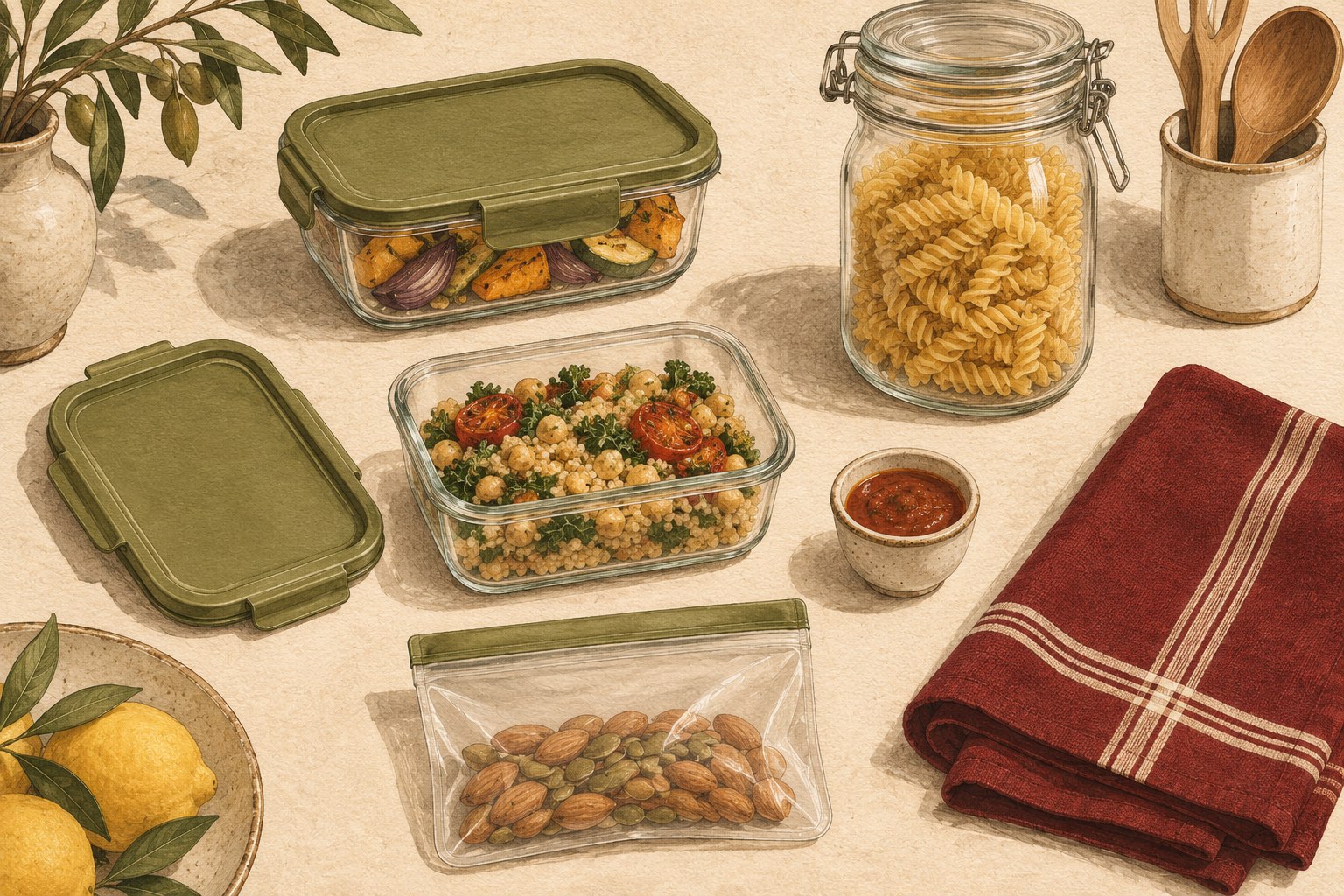
List the parts of a normal lunch and decide which should stay separate until serving. A rigid box may protect a crushable item, while a flexible bag can suit a different component. Check whether the intended portion fits comfortably without filling a container to an awkward rim. Avoid using an oversized box simply because it belongs to a matching set. Include any needed utensil and a clean place for it, and think about how the container will be opened at a desk, school table or other actual eating location.
Measure the bag with everything inside
Check the lunch bag's usable shape and closure, including the space needed for cold sources where appropriate. A container that fits alone may become inconvenient beside a bottle, utensils and the rest of the meal. Consider whether it must travel upright and whether the closing action is comfortable for its user. The Rubbermaid medium rectangle and Stasher sandwich bag provide different footprints for this exercise. Follow each product's instructions about filling and transport rather than treating a lid or seal as a guarantee for every orientation and food.
Treat temperature control as a separate task
An ordinary food-storage container is not a substitute for an appropriate cold or hot holding setup. USDA recommends an insulated soft-sided lunch bag and at least two cold sources when packing perishable food. If suitable refrigeration is available, its guidance advises storing the perishable items there on arrival. Plan the entire journey, including delays and the place the lunch waits before eating. Do not infer insulation from a rigid shape or clear lid. Keep current food-handling guidance with the routine instead of allowing container marketing to make the temperature decision.
Make the return trip manageable
Choose equipment you can open, empty, clean and dry consistently after use. Keep lids with their matching containers and check the seal areas while cleaning. If the system repeatedly returns with unused portions, reconsider the quantity rather than automatically buying another size. Keep a simple note of the combination that fits the bag with its necessary cold sources. Prepare the food as appropriate in advance, but follow USDA's advice about packing the lunch bag close to departure. A dependable lunch setup includes the trip home and cleanup, so tomorrow's meal begins with ready equipment rather than a missing lid or an unwashed box.
Tools to consider
A rigid portion container with a defined rectangular footprint.
Consider before buying: Allow bag space for the rest of the meal and any necessary cold sources.
A flexible option for a component that suits a bag.
Consider before buying: It does not provide the same crush protection as a rigid box.
A few practical questions
Does an airtight storage container keep a perishable lunch cold?
No. Use an appropriate temperature-control plan; USDA recommends an insulated bag and at least two cold sources for perishable packed food.
Put it to work
Lemony white bean skillet · Lemon-herb chicken & potatoes
Product information & sources
Recommendations are based on published product specifications and practical fit for the task. Check the exact model, seller, dimensions and care instructions before ordering.
Pinterest image
Keep this guide close for your next kitchen project.
