


Storage 3 min read
Store sauces in portions you can use

In this guide

Sauce storage works best when the next use is clear. Decide whether you need a spoonful, an individual portion or a whole meal's accompaniment before filling the nearest large container.
Name the next cooking task
Write down what the stored sauce is meant to do: accompany a lunch, finish a pasta dish or supply a future recipe. That makes a useful portion size easier to choose and reduces the need to reopen a large batch for a small amount. Keep different preparations distinguishable rather than relying on color alone. Follow current handling guidance for the sauce and its ingredients; the container's size does not decide how long the food can be kept. Prepare the appropriate storage space before you begin packing so the routine can be completed promptly.
Select a shape that supports filling
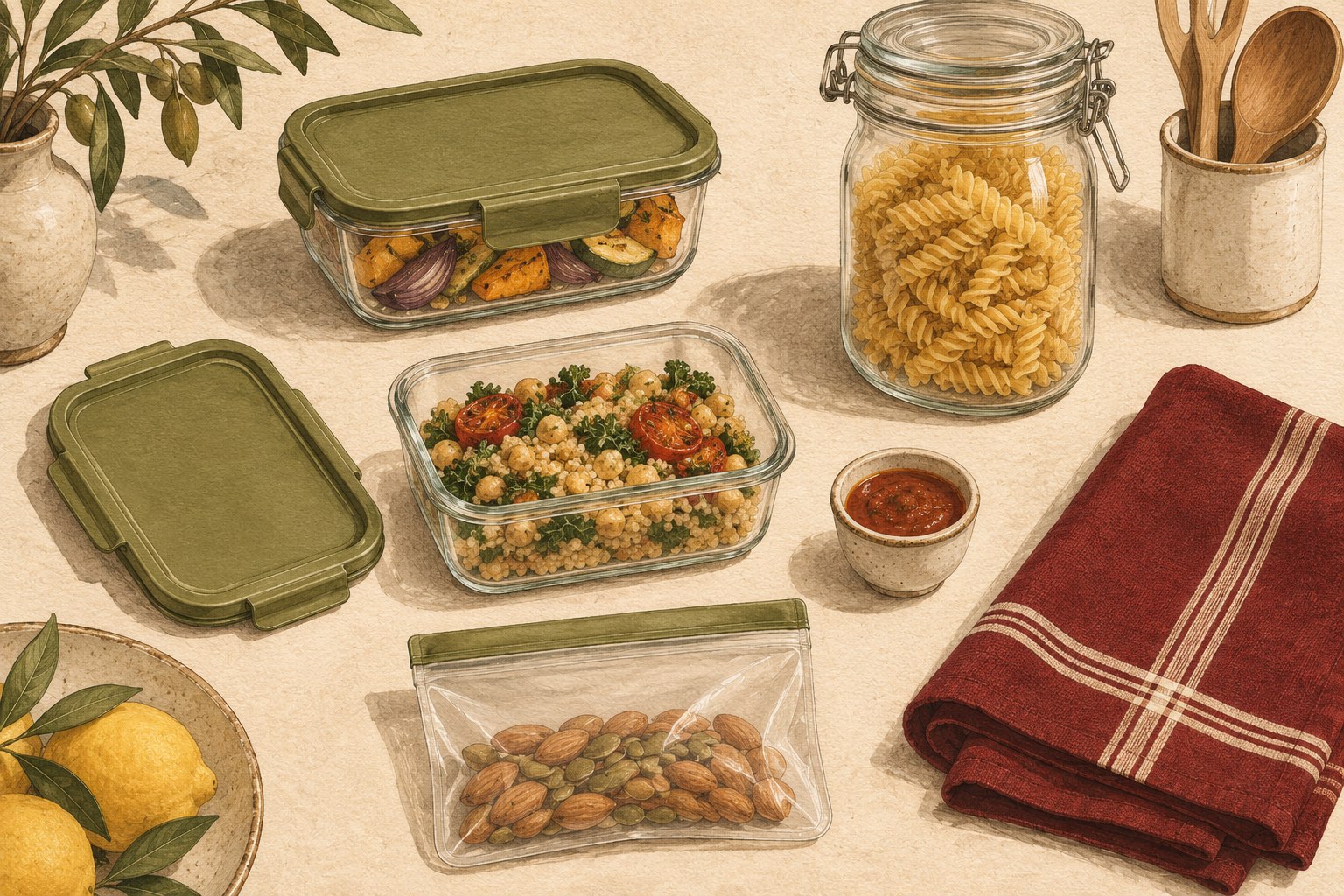
A rigid rectangular container gives you a defined opening and base. A flexible silicone bag needs a stable position while it is filled and closed. Compare those movements with the thickness and quantity of the sauce rather than treating all storage vessels as equivalent. Use a suitable transfer utensil and keep the sealing area clear of food according to the product's directions. Leave the required headroom for the intended use. A vessel's advertised capacity is the maximum descriptive size, not a universal instruction for how high every sauce should reach.
Keep the lid and seal understandable
Identify which lid belongs to the container before adding food. Similar-looking lids from another size can complicate closing and cleaning. The Rubbermaid medium reference and Stasher bag use different closing arrangements, so learn each one rather than expecting an identical feel. Inspect the accessible seal surfaces during cleaning and follow the manufacturer's directions about disassembly or heating. Do not transfer a permission printed for the body of a container to every lid or accessory. Put clean parts together in storage so the next batch does not begin with a search for a missing piece.
Make retrieval a simple decision
Label the contents and useful preparation or storage information where it can be read on the shelf. Group portions by intended meal or use a simple first-in-view arrangement, rather than hiding a small sauce behind unrelated large boxes. Choose the reheating or serving vessel according to the recipe and product directions, and follow current food-safety guidance when handling leftovers. After using a portion, note whether the size was practical. Adjust the next batch's division instead of continually buying new containers to solve a portioning problem that begins with the amount you pack.
Tools to consider
A rigid medium-size reference for a defined portion and opening.
Consider before buying: A small condiment quantity may need a smaller suitable container.
A flexible format for a portion that suits its opening and seal.
Consider before buying: Support it during filling and follow its headroom and closing directions.
A few practical questions
Does a seal guarantee the sauce can be carried any way?
No. Follow the exact product's closing and transport guidance, and choose a setup appropriate for the food and route.
Put it to work
Creamy tomato & spinach orzo · Lemony white bean skillet
Product information & sources
Recommendations are based on published product specifications and practical fit for the task. Check the exact model, seller, dimensions and care instructions before ordering.
Pinterest image
Keep this guide close for your next kitchen project.
